
Benton County Multi-Day Arrest Reports
Two narrative logs anchor Benton County blotter reading. The BCSO Daily Activity Log is the sheriff's running account of calls, warrant arrests, citations, releases, jail lodgings, and transports. It reads like a blotter, not a booking roster. No fixed 72-hour or weekly booking window is promised. Corvallis incidents appear in the Corvallis Police Daily Activity Log, another official narrative source. CPD leaves out protected and minor incidents along with open investigations, so a missing entry never proves there was no police contact or arrest in Corvallis.
How to Read Benton County’s Blotter
Work from the agency and the event date; no single blotter list covers all Benton County arrests.
- Check the BCSO Daily Activity Log for sheriff narratives and note the incident date, category, approximate place, and stated outcome.
- Check the CPD log when Corvallis Police handled the event. Respect its stated omissions.
- Use the BCSO current roster to see whether the person remains in custody and read the location field for a contract bed.
- Use the 31-day release report if the current name is gone. Release does not explain the legal reason by itself.
- Request the underlying report from the agency when the web window or narrative is insufficient, then use OECI for the court disposition.
For a newly processed custody question, the Arrested Today page explains the current-roster path.
What a Benton Arrest Entry Shows
A narrative log and a jail record hold different kinds of facts. Keeping the two apart stops one blotter sentence from standing in for a full booking file.
| Source field | Meaning and limit |
|---|---|
| Date and category | When and how the agency classified an incident, not a conviction date. |
| Approximate location | A block or general place; it may be limited for privacy. |
| Narrative | A short agency account that can mention a name, age, warrant, citation, release, or transport. |
| Jail destination | May say Benton County Jail or Linn County Jail; verify current location independently. |
| Roster identifiers | Booking and file numbers appear in the custody system, not consistently in narratives. |
| Photo | Neither BCSO’s log nor current roster is a public mugshot gallery. |
A booking charge can change later, so check the court register for the final count.
Release Reports Extend the Arrest Trail
The BCSO Adult in Custody Release Report lists people released from Benton County custody. That window covers the previous 31 days. It runs newest first. The sheriff aims for one update a day. That pace makes it stronger than the current roster for a short stay that already ended. The roster only shows who is in custody now. A release can follow bail, a court action, a citation, or a transfer. Cause is not stated. Don't guess from one list alone; the official record or court entry holds the answer.
Weekend Arrest Reports and Catch-Up
No Benton County sheriff source promises a special weekend arrest roundup. Weekend and holiday searching still matters, because the systems move at different speeds. The custody report refreshes roughly every four hours. The release report updates about daily. Narratives carry no schedule at all. An arrest made late Friday may still surface in a later narrative. Custody may have already shifted by then. So a Monday search should reach past Monday's visible entries. Check the event date, the posting date, and the current custody state separately.
Local News Logs Need Context
Philomath News republishes Philomath Police and BCSO logs from agency submissions. Its own caveats note incomplete call lists. Locations are approximate, and no juvenile names appear. It adds local color. It is not the official jail source. The Gazette-Times crime and courts section picks selected cases, not every Benton County arrest.
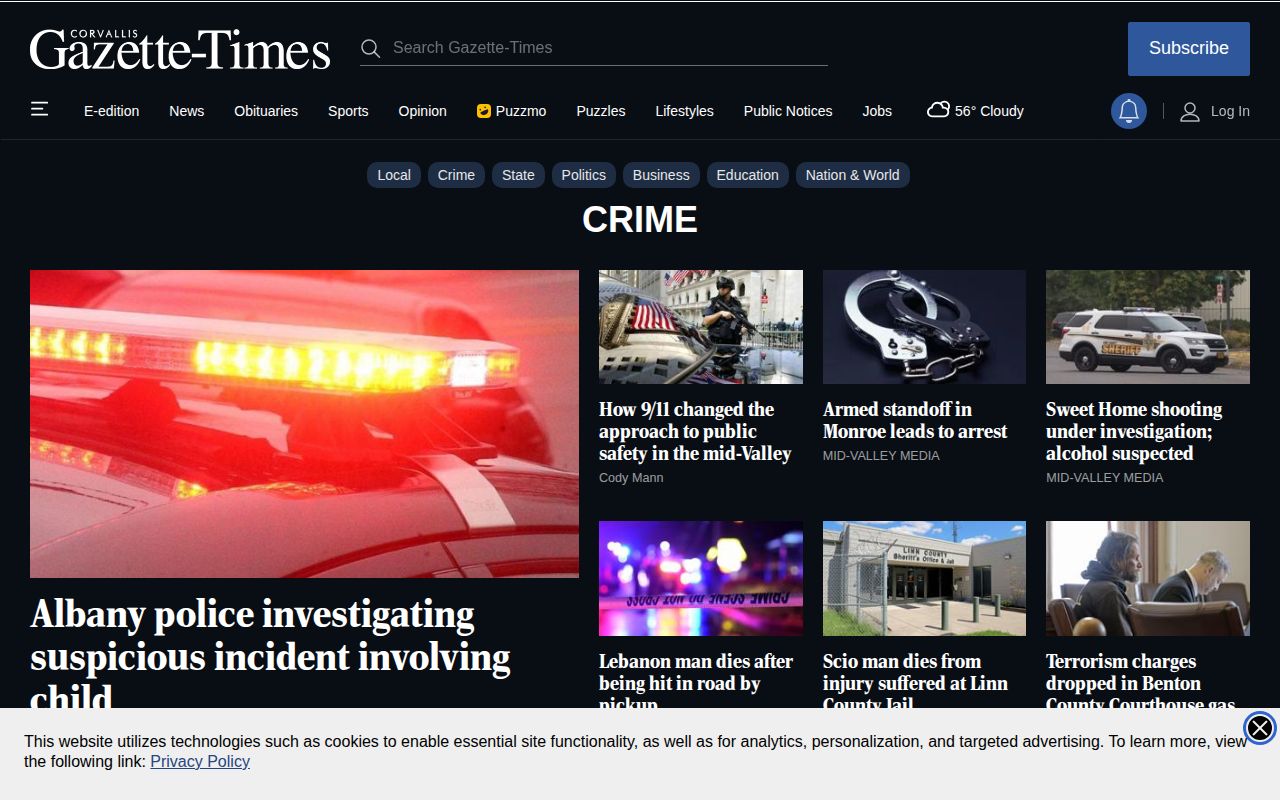
News coverage reflects editorial choice, not the full arrest record.
Unofficial Benton County Arrest Indexes
Official Benton County sources come first. The RecentlyBooked's Benton County page offers a rolling 30-day view pulled from law-enforcement data. It is not run by the sheriff. Entries there can be delayed, duplicated, incomplete, or attached to the wrong person.
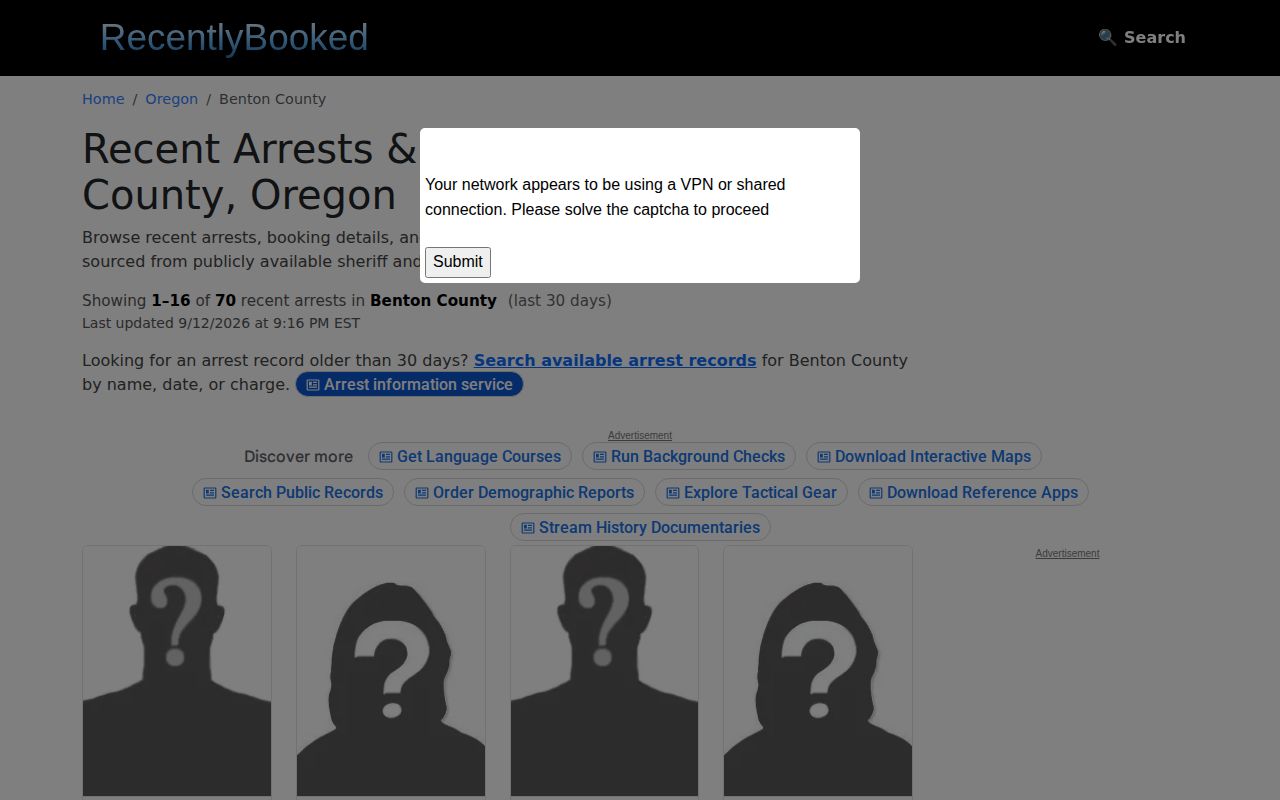
Other commercial Benton County arrest pages stay thin or lean on old material, and some still show booking photos the sheriff no longer posts. Old images linger there. Treat no third-party date range as a full arrest record. Official BCSO sources remain the real measure.
Benton Arrest Archives and Requests
The public Daily Activity Log carries no promise of being a permanent archive. Need older material? Call BCSO at 541-766-6858 and ask for the current records-request route. Spell out the date range, agency, subject, incident or booking number, and the exact record you want. The jail line is 541-766-6866, for custody questions.
Deeper history lives elsewhere. The Oregon State Archives Benton County inventory catalogs historical jail registers and court files, noting dates, locations, and restrictions. Think of it as a finding aid. It is not a live arrest log. State retention schedules name record categories, but they cannot prove how long each BCSO web field stays posted.
City police handle their own files. Corvallis Police runs a Records Unit route for closed-case reports, while Philomath Police takes requests through its form and warns that costs vary by report type and length. Ask each agency for an estimate and current processing details, since county rules do not govern a city file.
Separate Incident, Booking, and Case Dates
One arrest can collect dates like magnets. The incident itself may start before midnight. The arrest comes later, booking follows transport, and the agency may publish its narrative on a different day entirely. Court filings and arraignments add more. Sort by the day a web item appeared, and the right record can slip past unnoticed.
Identifiers tie those stages together. A BCSO narrative may carry an incident reference, while the roster lists a booking number, file number, and arrest case number. Court registers add case information of their own. Names alone work poorly, since people share them and spellings drift. Quote identifiers exactly in a records request. Skip repeating personal details you do not need.
Location carries its own meaning. A log may point to the approximate incident site, while the roster's location field shows where the person is actually held. Rental-bed codes mean a Benton County arrestee can sit in a jail outside Benton County. Check the latest custody source before trusting a narrative that mentions transport to Linn County Jail.
Arrest Reports Are Not Judgments
Arrest records speak in two vocabularies. Words like arrested, cited, lodged, and released describe enforcement and custody events. Dismissed, acquitted, convicted, diverted, and sentenced come later, once a court decides the case. Oregon Judicial Department access lets you follow a public case to its result. Some juvenile, mental-health, and VAWA matters stay sealed. Absence from a log proves nothing.
Public Record Search
Sponsored Results